Why the two-person booth is a deliberate strategy, not a downgrade
A small team trade show strategy scale-up exhibitor in Nederland is not improvising. When a Dutch SaaS scale up sends only two people to a trade show at RAI Amsterdam or Jaarbeurs Utrecht, it is usually a deliberate strategy to align limited on site capacity with high value sales conversations. The exhibitor who treats a two person booth as a cost saving compromise will always lose to the exhibitor who treats it as a focused revenue engine.
On the show floor, the constraint of a small équipe forces sharper planning and clearer goals than many larger exhibitors ever articulate. Enterprise exhibitors often flood the floor with staff, but their events strategy drifts toward vanity metrics such as raw attendees scanned rather than qualified buying committees engaged. Dutch scale ups that accept they will never cover the entire show floor instead design a show strategy around a narrow ICP, a short list of target accounts, and a realistic number of deep conversations per day.
For high ACV B2B deals, one serious conversation can outweigh fifty casual badge scans in terms of ROI and pipeline impact. That is why the two person show booth model works best when your average contract value justifies thirty to forty five minute discussions about architecture, procurement, and implementation rather than quick feature demos. In that context, the exhibitor with a lean team and a disciplined sales marketing playbook can outperform bigger exhibitors who chase every passer by on the trade show floor.
Pre-show strategy: meetings, goals and floor plan discipline
Everything about a small team trade show strategy scale-up exhibitor starts in the pre show phase, not on the first morning of the event. With only two people on site, you cannot rely on walk up traffic to hit your sales goals or justify the booth investment. You need to create a pre show pipeline of meetings, demos, and coffee chats that will fill at least sixty to seventy percent of your available time slots.
Begin with explicit goals that connect the event to revenue, not just to marketing vanity metrics or social media buzz. For a Dutch cybersecurity exhibitor at Infosecurity Netherlands, that might mean twelve qualified buying committees met, eight opportunities created in the CRM, and a target cost per qualified lead that fits your overall sales marketing budget. Those goals will drive your show planning decisions, from which sponsor package you negotiate to whether you invest in a corner booth near the main aisle or a smaller stand closer to the content theatres.
Next, map the floor plan with ruthless realism about your limited time and energy on the show floor. Identify the three to five zones where your ideal attendees will cluster, such as the fintech pavilion at Money 20/20 Europe or the logistics innovation zone at ICT & Logistiek. Then build a contact list of target accounts in those zones, send personalised email sequences with clear calendar links, and reference agenda sessions that matter to the buying committee, using frameworks like the buying committee centric approach described in this analysis of the thirteen stakeholder problem at Dutch events on building your event shortlist around the buying committee.
Booth setup for minimal staff: exhibit design that works while you talk
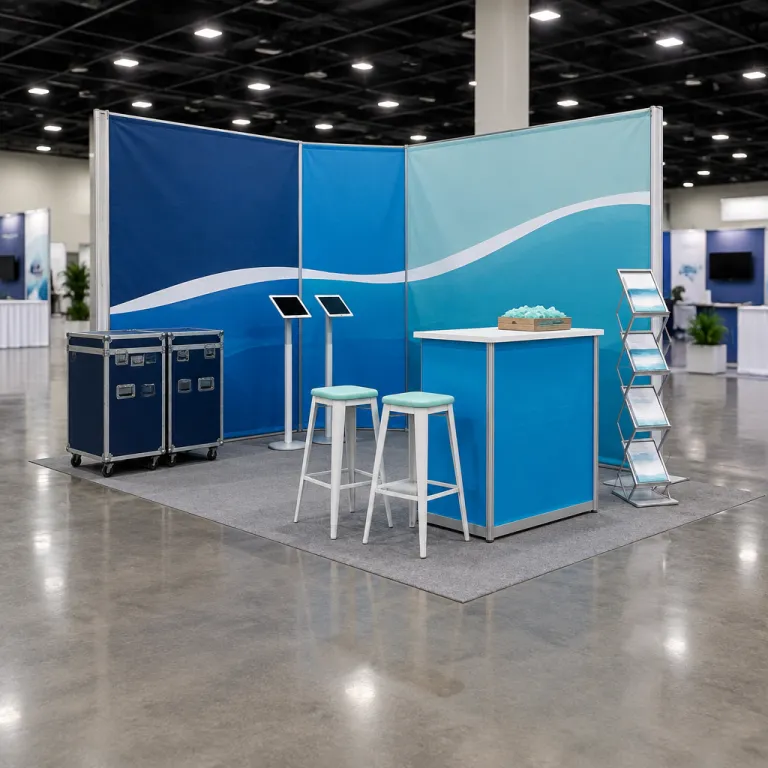
On site, a small team trade show strategy scale-up exhibitor lives or dies by exhibit design that works even when both people are busy. The booth must signal clearly who you serve, which problems you solve, and what type of attendees should stop, without needing a staff member to explain every item. In Dutch venues where the show floor is dense and noisy, such as RAI Hall 10 during Webwinkel Vakdagen, clarity beats cleverness every time.
Design your show booth as a self service environment that supports lead capture and qualification while you are in conversation. Use a large screen loop with a two minute product narrative, QR codes that link directly to calendar booking pages, and digital collateral instead of printed items that attendees will forget in their hotel room. A simple tablet kiosk with a short form and a clear value exchange, such as a benchmark report for your niche, can generate consistent lead generation even when both team members are tied up.
Smart exhibit design also reduces common trade show mistakes to avoid for small exhibitors, such as cluttered graphics, unclear messaging, or dead corners that waste precious square metres. Management software for events can power real time content updates on your screens, so you can adapt messaging between morning and afternoon based on which segments are actually visiting your booth. For a practical checklist on pre show, on site, and post show items tailored to Dutch B2B teams, many exhibitors refer to this detailed exhibitor guide on running a booth with limited staff, which breaks down every step from floor plan selection to post show follow up.
The conversation split: roles, tools and lead capture without an army
Inside the booth, a small team trade show strategy scale-up exhibitor needs a disciplined conversation split to avoid chaos. One person leads with qualification, while the other handles deeper demos and technical questions, and they switch roles every ninety minutes to manage energy and maintain focus. This rhythm keeps both exhibitors fresh and ensures that no serious prospect leaves without a clear next step.
The qualifier focuses on understanding the attendee’s role, budget, and timeline, using a short set of questions aligned with your sales process and CRM fields. They handle quick interactions on the edge of the booth, capture essential lead data via mobile first lead capture tools, and route high potential contacts to the demo lead for a more detailed conversation. Digital badge scanning and mobile apps now allow real time tagging of buying stage, product interest, and follow up owner, which removes the need for a dedicated scanner operator on the show floor.
Meanwhile, the demo lead uses a structured narrative and a small set of tailored use cases, rather than improvising every time. They rely on management software for events to access product content, case studies, and pricing scenarios on a tablet, which keeps the conversation grounded in accurate données and avoids mistakes to avoid such as quoting outdated packages. When both team members are busy, a simple queue system with QR codes and automated email confirmations can create a virtual waiting list, so high intent attendees do not drift away while you finish another meeting.
Post-show workflow: from raw contacts to qualified pipeline with no ops team
Once the event ends, a small team trade show strategy scale-up exhibitor cannot hand a spreadsheet to a distant marketing operations team and hope for the best. The same two people who ran the booth usually own the post show follow up, which makes process discipline non negotiable. Without it, even the best show strategy on site will fail to convert into revenue.
Block dedicated time in the first three working days after the trade show for structured follow up, before normal inbox noise takes over. Start by segmenting leads into three tiers based on buying intent, fit, and influence in the buying committee, using the tags you applied in real time on the show floor. Tier one contacts receive personalised email outreach referencing specific conversations and agreed next steps, while tier two and three receive more scalable but still relevant sequences that nurture them toward a meeting.
Show management does not end when the lights go down in the venue ; it ends when you can attribute closed won deals and learning back to specific events. Use your CRM and any event management software to calculate ROI per show, including total cost, number of qualified leads generated, and eventual revenue, so you can compare events and refine your planning. For Dutch scale ups that sponsor multiple events per year, this discipline also informs smarter sponsorship negotiations, as argued in this analysis of the sponsor tier nobody negotiates on why Dutch B2B teams overpay for logo placement, which shows how better data can shift budget from logo exposure to direct buyer access.
Budget, ROI and the real cost of a two-person Dutch booth
For a small team trade show strategy scale-up exhibitor, the budget conversation is not abstract ; it is existential. Global benchmarks show that exhibitor per show spending can average around USD 24,000 across all company sizes, but Dutch scale ups often operate at half that level while still aiming for serious pipeline impact. The constraint forces sharper trade offs between booth size, sponsorship items, travel, and on site activities.
On the cost side, you need a full view of stand rental, exhibit design, logistics, travel, accommodation, and any paid lead generation add ons offered by show organizers. On the return side, you should track not only immediate sales but also influenced opportunities, partner introductions, and strategic learning that will shape future events strategy. When you calculate ROI, include the durée of the sales cycle and the expected lifetime value of a customer, especially in Dutch B2B markets where retention and fidélité can turn one deal into a decade of recurring revenue.
Management software for events and basic analytics can help you compare events on a like for like basis, using metrics such as cost per qualified lead, conversion from meeting to opportunity, and revenue per show. Over time, this data will reveal which trade shows, conferences, and niche events in Nederland truly move the needle for your ICP, and which are just noise on the calendar. In the end, the metric that matters most for a two person booth is not the raw attendee count, but the number of real buying committees you managed to get in the room.
FAQ: small team trade show strategy for Dutch scale-up exhibitors
How many meetings should a two-person booth aim for per day ?
For a high ACV B2B exhibitor, a realistic target is eight to twelve scheduled meetings per day for a two person booth. That usually means four to six deeper conversations per person, each lasting twenty to forty minutes, plus a buffer for walk up discussions. Pushing beyond that often reduces quality and makes it harder to capture accurate lead data for post show follow up.
Is a small booth size a disadvantage for Dutch scale ups ?
A smaller booth is not automatically a disadvantage if the exhibit design is clear and focused. Many Dutch scale ups at RAI Amsterdam or Jaarbeurs Utrecht run 9 to 12 square metre stands that outperform larger neighbours because their messaging, demos, and lead capture flows are tightly aligned with their ICP. The real disadvantage is a booth, of any size, that does not signal who should stop and what value they will gain from a conversation.
Which tools are essential for lead capture with a two-person team ?
The essentials are a reliable badge scanning or mobile lead capture app, tight integration with your CRM, and a simple tagging scheme for intent and segment. Many exhibitors also use QR codes linked to calendar booking pages and digital content hubs to reduce manual data entry. The goal is to capture enough structured information in real time on the show floor that post show follow up can be fast, accurate, and prioritised.
How should small teams prioritise which trade shows in Nederland to attend ?
Start by analysing where your existing Dutch and Benelux customers first met you or your competitors, and which events consistently attract your target buying committees. Then compare potential shows on cost per qualified lead, quality of attendees, and access to decision makers rather than on headline visitor numbers. For many scale ups, a focused vertical event with fewer but more relevant attendees will outperform a massive generalist trade show.
What are the most common mistakes small exhibitors should avoid ?
Common mistakes include vague goals, last minute show planning, and relying solely on walk up traffic instead of pre booked meetings. Other pitfalls are cluttered booth graphics, no clear call to action, and weak post show follow up that treats all leads the same regardless of intent. Small teams that avoid these mistakes and treat each event as a tightly run sales campaign usually see stronger ROI from their trade show investments.