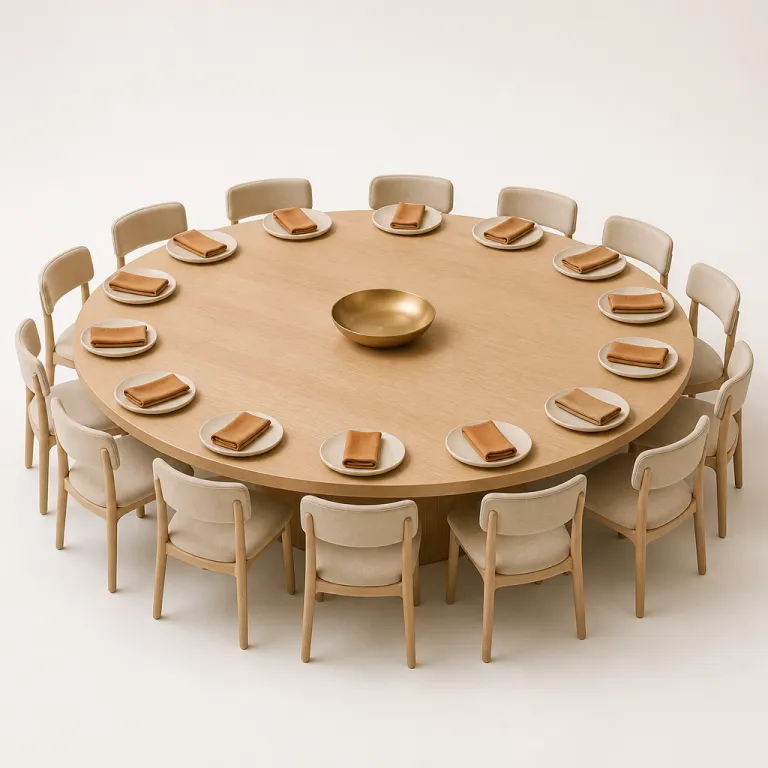
Why a 15-person micro event beats a 50-square-metre booth
In the Netherlands, the smartest exhibitors now treat every major trade show week as a platform for micro-event hosting trade show week B2B rather than just a race for the biggest booth. A 15-person executive dinner or curated micro event during Amsterdam Drone Week at RAI convention center routinely generates more qualified conversations than a 50 square metre stand facing Hall 10’s main aisle, because the format filters for intent and compresses the buying committee into one room. When you compare the events side by side, the booth delivers reach while the small dinner delivers decisions.
Industry data from Dutch field marketing teams shows a familiar pattern in almost every event : thousands of attendees walk past, a few hundred visited booth locations, and maybe 80 leads end up in the CRM, but only a fraction convert into real opportunities. By contrast, a private micro event with 15 carefully selected attendee profiles can yield 10 pipeline opportunities, which means the cost per qualified lead is often lower than the average EUR 10 000 booth fee reported in recent industry reports. That is why exhibitors who treat the expo as top-of-funnel marketing and the side dinner as the real engagement engine are quietly out-performing their peers on business growth.
Company surveys across Benelux show that shifting budget from a large booth to a focused private event can increase client engagement by roughly 30 percent, especially when the experiences are tailored to specific accounts and sectors. The same surveys indicate that private events allow for focused client interactions and that hosting dinners can be more memorable than booth visits, which directly supports a long term relationship strategy. In practice, the Dutch teams who create these micro events see higher lead generation quality, stronger brand recall, and a more predictable follow up motion after the show.
From a pure event marketing perspective, the trade show floor is still useful because it legitimises your presence and signals that your brand plays in the same league as incumbents. Yet the real time conversations that move deals forward rarely happen in front of a demo screen while other attendees hover around the booth waiting for swag. They happen when a decision maker relaxes over dessert at a small table, hears a relevant case study, and realises that your solutions include a concrete answer to a painful operational problem.
Think of the expo as the awareness engine and the micro-event hosting trade show week B2B as the conversion engine, each with distinct KPIs and engagement models. On the floor, your équipe scans badges, runs product experiences, and tries to keep the energy high for passing attendees, while in the evening your senior team hosts a micro event where the agenda is built around the buying journey of three or four named accounts. The exhibitors who master both environments treat the booth as a filter for interest and the dinner as the place where they create consensus across the full buying group.
Virtual and hybrid events have not killed this model ; they have made it sharper. Dutch SaaS vendors at events like Money20/20 Europe now run virtual hybrid formats where a physical executive dinner in Amsterdam is paired with a virtual micro event for remote stakeholders, using the same content spine and the same keynote speakers across both experiences. In these hybrid events, the event platform becomes the backbone that connects pre event invitations, real time participation data, and post event follow up tasks into one coherent workflow.
Designing micro events during Dutch trade show weeks
Once you accept that a 15-person dinner can outperform a 50-square-metre booth, the next question is how to design micro events that actually work in the Dutch trade show context. Timing is the first strategic lever, because your micro event must sit inside the gravity field of the main convention center while avoiding the official networking events that compete for the same attendee attention. In practice, the most effective Dutch exhibitors host their micro event on the second evening of a multi day show, when travel fatigue is lower and the first wave of booth meetings has already surfaced serious prospects.
Venue selection in Amsterdam, Rotterdam, or Utrecht is not a lifestyle choice ; it is event marketing strategy. A restaurant within 10 minutes walking distance from RAI or Jaarbeurs keeps friction low for attendees who have already visited booth locations during the day and are juggling multiple invitations. Smart exhibitors reserve a private room that can handle both a seated dinner and a short standing reception, which allows them to orchestrate different experiences for early arrivals, latecomers, and those who prefer quick networking events over long meals.
Guest curation is where micro-event hosting trade show week B2B either compounds value or quietly fails. Dutch field marketing managers now build guest lists using a mix of pre event intent data, on-site signals such as which accounts visited booth demos, and sales intelligence from account teams who know which decision makers are actually in Amsterdam that week. The goal is to assemble a small but complete buying committee per account — one technical attendee, one business sponsor, one procurement voice — so that the conversations at the event can move beyond generic product pitches.
During the day, your booth still matters, but its role changes. Instead of chasing every passer-by, your équipe uses the booth to qualify attendees for the evening micro event, inviting only those whose engagement and questions suggest real projects, while politely steering others toward virtual sessions or later follow up. This shift turns the booth into a live filter for lead generation, where the metric is not badge volume but the number of right-fit prospects who accept a seat at your small dinner.
For Dutch teams operating across sectors like fintech, logistics, and industrial technology, the most effective event planning playbooks now integrate learnings from technology trade shows in Nederland that reshape B2B decision making. These playbooks treat micro events as modular components that can be replicated across different shows, with templates for agendas, menus, and content that still leave room for local nuance. Over time, the data generated from these repeated events — attendance rates, conversion ratios, and deal velocity — becomes a strategic asset that informs which trade show weeks deserve a micro-event investment next season.
Even when you run virtual hybrid formats, the same design principles apply. A virtual micro event scheduled during a major Dutch expo should still be anchored in the show’s narrative, using keynote speakers from the main stage and referencing themes that attendees heard earlier in the day. The difference is that your event platform now carries more weight, because it must handle real time streaming, segmented engagement tools, and post event analytics that feed directly into your CRM and marketing automation stack.
Invitations, positioning, and avoiding the hard-sell trap
Most micro-event hosting trade show week B2B initiatives fail not because of logistics, but because the invitation feels like a thinly veiled sales pitch. Senior Dutch decision makers receive dozens of generic invites to networking events during every major show, and they can smell a quota-driven dinner from the subject line alone. To stand out, your event must be framed as a peer exchange where the value lies in the other attendees as much as in your brand.
Effective invitations in the Netherlands now read more like curated roundtable briefs than marketing emails. They specify the type of attendee expected — for example, “CFOs and Heads of Treasury from Dutch and DACH mid-market banks” — and they clearly state that the event is capped at a small group of 12 to 15 participants to protect the quality of the conversation. When you position the micro event as a working session on a concrete theme, such as “real time payments compliance in cross-border trade”, you give busy executives a reason to prioritise your dinner over yet another reception.
Content design matters as much as the menu. The most effective Dutch exhibitors structure their micro events around one short case study, one facilitated discussion, and one informal networking block, rather than a long slide deck that feels like a private keynote speakers session. This format respects the fact that attendees have already spent a full day in sessions at the convention center and now want experiences that feel conversational, not didactic.
To avoid the we-are-selling-you perception, your sales équipe should not dominate the room. A good rule is that no more than one internal attendee per three external guests should be present, and that your most senior person opens the event with a brief welcome that emphasises learning and peer exchange. When your team behaves like hosts rather than closers, the engagement feels authentic, and the long term impact on brand perception is far stronger than any scripted pitch.
Some Dutch exhibitors now borrow playbooks from international finance conferences such as CICF in Hong Kong, where curated side events are standard practice for serious B2B finance events strategy. They adapt these models to the Dutch context by shortening the formal content, adding more time for unstructured networking, and integrating local elements that make the experience feel rooted in Amsterdam or Rotterdam rather than imported wholesale. This hybridisation of global best practices with local expectations is what separates memorable micro events from forgettable dinners.
When you follow up after the event, resist the urge to send a generic marketing sequence that treats every attendee as a net new lead. Instead, your post event workflow should reflect the intimacy of the micro event, with personalised notes referencing specific conversations, shared documents that build on topics raised at the table, and clear next steps that respect each attendee’s buying stage. In this model, the micro-event hosting trade show week B2B approach becomes a bridge between high-level thought leadership and concrete opportunity creation, rather than just another touchpoint in a crowded campaign.
Measurement, attribution, and the real economics of Dutch micro events
For a Dutch field marketing manager, the hardest part of micro-event hosting trade show week B2B is not filling the room ; it is proving that the 15-person dinner beat the 50-square-metre booth on hard numbers. The economics are compelling on paper, because industry reports show that the average trade show booth cost is around EUR 10 000 while the average private event cost is closer to EUR 5 000, but finance teams still want clear attribution. Your job is to build an attribution model that separates the impact of the main event from the impact of the micro event without double counting.
Start by defining distinct KPIs for each component of your events portfolio. For the booth, track metrics such as total attendees engaged, number of people who visited booth demos, and volume of scanned leads, accepting that many of these will remain top-of-funnel. For the micro event, focus on the number of accounts represented, the seniority of each attendee, the depth of engagement during and after the event, and the number of opportunities created or accelerated within a defined post event window.
In practice, Dutch teams who run both formats now tag every contact with multiple dimensions in their CRM — event, session, micro event, and follow up actions — so that they can later attribute revenue to the right touchpoints. When a deal closes, they can see whether the first engagement came from a booth interaction, a virtual session, or a micro event, and whether the decisive conversation happened at the convention center or at the dinner table. Over time, this data reveals patterns that justify shifting budget from large booths to a portfolio of smaller micro events and virtual hybrid experiences.
Company case studies in the Netherlands show how powerful this shift can be. One industrial technology vendor reported that a single 15-person dinner during a Rotterdam maritime expo led to contracts worth several hundred thousand euros, echoing broader findings that smaller events often lead to higher quality leads and better client retention rates. Another Dutch software company used a series of workshops and private product showcases during a logistics trade show week to increase client retention by around 20 percent, proving that tailored events can create both short-term pipeline and long term loyalty.
To strengthen your internal business case, benchmark your cost per qualified lead from micro events against your historical booth performance and against curated peer exchanges at other conferences. Resources that analyse how dual-language conferences shape B2B education events strategy for Dutch professionals show that when content and audience fit are tight, even small events can outperform large expos on ROI. The same principle applies here : not the attendee count, but the buying committee in the room.
As you refine your model, remember that measurement is not just about revenue attribution but also about strategic learning. Track which themes, formats, and combinations of in-person and virtual elements generate the strongest engagement, and feed those insights back into your event planning cycle for the next trade show week. Over several seasons, your organisation will build a proprietary playbook for micro-event hosting trade show week B2B in the Netherlands that no competitor can easily copy, because it is grounded in your own données, your own relationships, and your own market position.
Key figures on Dutch micro events during trade show weeks
- Average trade show booth investments for Dutch exhibitors are reported at around EUR 10 000 per show, while focused private events often cost about EUR 5 000, meaning micro events can operate at roughly half the cost of a standard stand according to recent industry reports.
- Company surveys across Benelux indicate that shifting part of the budget from booths to private events can increase client engagement by approximately 30 percent, highlighting the efficiency of small curated formats for B2B decision makers.
- Case studies from European exhibitors show that a single 15-person dinner held during a major trade show week has generated contracts worth several hundred thousand euros, demonstrating that one micro event can rival the pipeline impact of multiple traditional events.
- Workshops and private showcases run alongside large expos have been associated with client retention improvements of around 20 percent in some companies, suggesting that tailored micro events support both new business and long term account fidélité.