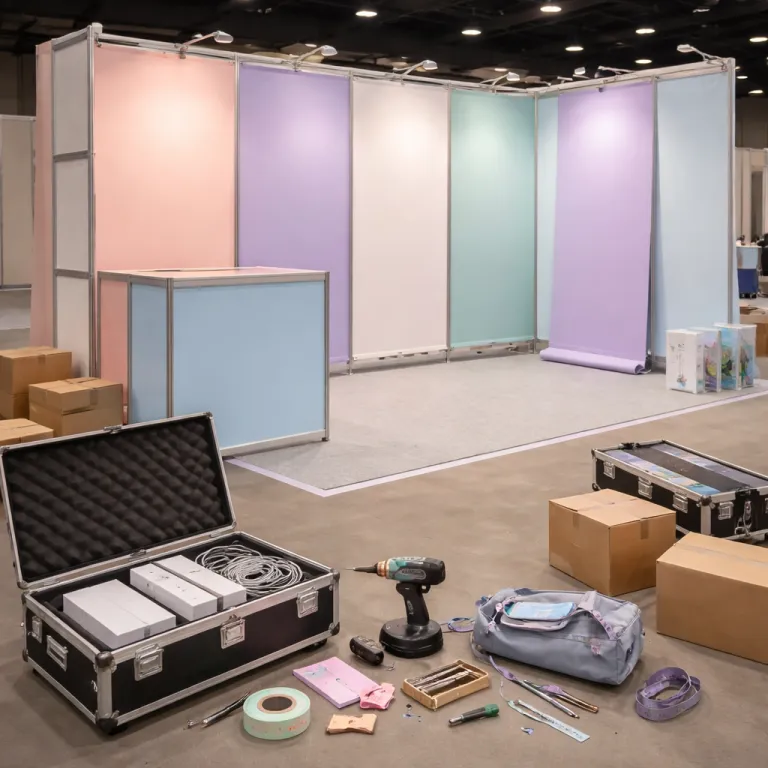
From trade show chaos to a Dutch exhibitor operating system
Most Dutch B2B teams still treat each trade show as a one-off sprint. The exhibitor who consistently wins on the RAI Amsterdam show floor or at Jaarbeurs Utrecht runs a repeatable operating system that turns every event into a predictable pipeline engine. In this exhibitor guide trade show checklist, the focus is on what your team does at each moment in pre-show, on-site, and post-show phases, not on glossy slogans.
Across Benelux, field marketing managers typically juggle 40–50 distinct trade show tasks per event, from booth design approvals to material handling forms and last-minute shipping changes. Internal surveys from several Dutch SaaS and manufacturing firms (sample size: 27 events in 2023–2024) show a median of 46 tasks per show, which aligns with this range. Without a planning guide that locks objectives, show budget, and labor allocations eight weeks out, the exhibitor will drift toward vanity metrics like badge scans and social likes instead of qualified opportunities and measurable ROI. The aim of this guide is simple: give every show exhibitor a concrete, timed checklist that aligns marketing, sales, and leadership on what success actually looks like.
For senior leaders, the hard question is not whether to exhibit, but where exhibiting really moves the pipeline in the Netherlands. With more than 500 summits and trade show events competing for the same target audience, your exhibitor guide must help you choose between a 24 m² booth space at World Summit AI in RAI Hall 10 and a smaller custom presence at a vertical industry event in Jaarbeurs. The right show planning framework turns that choice into a quantified decision about cost per lead, buying committee density, and brand awareness lift among named accounts.
Eight to two weeks pre show: objectives, show budget, and booth design brief
Eight weeks before any Dutch trade show, your exhibitor guide should force one ruthless conversation about objectives. At this stage, the exhibitor, sales leadership, and product marketing agree on three measurable results only; for example, 40 qualified meetings with procurement leaders from Dutch manufacturing firms, 10 late-stage pipeline accelerations, and 1 strategic partnership initiated on the show floor. Anything that does not support those outcomes, from swag choices to custom exhibits, is deprioritised.
Translate those objectives into a show budget that breaks down every cost line: booth space, booth design, custom exhibits, material handling, shipping, local labor, and on-site services at RAI or Jaarbeurs. Dutch VAT rules mean your costs for standbouw, catering, and temporary staffing agencies in Amsterdam or Utrecht must be tracked separately to avoid surprises in the post-show reconciliation. Use a planning guide spreadsheet that tags each cost against a KPI such as cost per qualified lead, cost per scheduled meeting, or cost per demo, and align this with your CRM fields well before pre-show campaigns start.
With budget guardrails set, issue a booth design brief that reflects both your brand awareness goals and the realities of the show floor. For a 36 m² island booth, apply the staffing benchmark of one staff member per 4.5 m² of booth space, and specify how the booth will support three flows: scheduled meetings, walk-up demos, and quick scans for lighter exhibiting trade interactions. This is also the moment to integrate sustainable booth design elements, such as reusable structures and digital displays, which reduce long-term costs and signal seriousness to your industry peers.
Pre-show content work starts here as well, anchored in a clear show marketing narrative tailored to the Dutch target audience. Map one core message per persona — for example, a procurement director at a Rotterdam logistics firm versus a CTO at a fintech scale-up — and script how your team will articulate that message in 20 seconds at the exhibit. For deeper strategy on positioning and exhibitor marketing in the Netherlands, many teams benchmark their approach against specialised analyses on elevating exhibitor marketing strategies for B2B event success in Nederland, then adapt those insights to their own industry context.
8-week exhibitor planning timeline (summary)
| Week | Focus | Key actions |
|---|---|---|
| Week 8 | Objectives | Agree on 3 outcomes, define target accounts, confirm show budget ceiling. |
| Week 7 | Booth & vendors | Finalize booth design brief, select standbouw partner, book logistics slots. |
| Week 6 | Content | Lock messaging per persona, outline demos, draft outreach sequences. |
| Week 5–4 | Campaigns | Launch pre-show invitations, confirm meeting targets, test lead capture tools. |
| Week 3–2 | Execution | Approve graphics, rehearse demos, finalise staffing rota and training. |
Two weeks to show day: logistics, outreach, and meeting choreography
Two weeks before the event, the exhibitor guide trade show checklist shifts from strategy to execution. By now, every exhibit asset should be locked: graphics approved, demo stations tested, and shipping booked with buffers for Dutch and cross-border transport delays. Your team should treat this period as a dress rehearsal for exhibiting, not as a design sprint.
On logistics, confirm all material handling and shipping slots with the official freight forwarder for RAI Amsterdam or Jaarbeurs Utrecht, including exact delivery windows and required documentation. Clarify which labor is handled by the organiser’s appointed contractor and which tasks your own team will perform, because misaligned expectations here can double your costs on build-up day. For custom exhibits, insist on a detailed build schedule that shows when the booth will be safe for technical installations, demo equipment, and final booth design touches.
In parallel, pre-show outreach must turn your target audience list into a concrete meeting calendar. Coordinate with sales to send personalised invitations to named accounts, offering specific 20-minute slots at the booth or in quiet meeting pods away from the main show floor noise. Use your CRM to tag each invitee with intent level and buying role, so that on-site your exhibitor team knows exactly which visitors merit senior attention and which can be handled by SDRs or partners.
For Dutch B2B teams, this is also the moment to align with procurement-driven visitors who arrive with structured shortlists. Many buying teams follow a pre-show shortlist process that cuts 30 vendors down to 6 structured meetings, and your show marketing must position your exhibit as one of those six. Align your messaging, demos, and proof points with the evaluation criteria those committees use, such as integration capabilities, implementation timelines, and total cost of ownership over a three-year period.
Sample trade show budget breakdown (illustrative)
| Cost category | Share of budget |
|---|---|
| Booth space & registration | 30% |
| Booth design & build | 25% |
| Shipping & material handling | 15% |
| Travel, accommodation, per diem | 15% |
| On-site services & utilities | 10% |
| Marketing, swag, contingencies | 5% |
On site at RAI or Jaarbeurs: booth flow, lead capture, and daily discipline
Once the trade show opens, the exhibitor guide becomes an operating manual for your team on the show floor. The most effective exhibitors treat each day as a series of controlled sprints: morning stand-up, focused exhibiting blocks, and tight debriefs before leaving the event venue. This rhythm protects your show budget from being wasted on unqualified conversations and random demos.
Start with booth flow design that matches your objectives and the physical realities of Dutch venues. At RAI Amsterdam, wide aisles in halls 1 and 5 encourage open corner exhibits, while Jaarbeurs corridors can create bottlenecks that demand a more focused booth design with clear entry and exit paths. Position your custom exhibits and demo stations so that passers-by can engage in under 30 seconds, while serious buyers are quickly routed to seated areas where your team can qualify needs and discuss costs in depth.
Digital lead capture is now standard, and your exhibitor guide trade show checklist should specify exactly how each role uses scanners or apps. SDRs scan and tag every contact with interest level, buying role, and next step, while senior sellers add free-text notes on budget, timeline, and decision process to enrich the data. The quote "Most underperforming programmes trace to insufficient staff qualification training and delayed follow-up" should be printed on your staff room wall, because it captures why so many expensive shows fail to convert.
Discipline matters as much as design. Run 10-minute daily debriefs where the exhibitor, sales, and marketing review which segments of the target audience actually showed up, which messages landed, and where the booth will need adjustments for the next day. If you see that procurement leaders from Dutch healthcare providers are engaging more than expected, reassign labor and adjust show marketing signage to highlight relevant case studies and pricing models that address their specific cost pressures.
Throughout the event, keep one eye on the economics of exhibiting. Track how many qualified meetings, demos, and late-stage opportunities your team is generating relative to the total show budget, including hidden costs like overtime labor and last-minute shipping surcharges. For a deeper breakdown of what a realistic cost per qualified lead looks like in the Dutch context, many field marketers rely on analyses of the real cost of exhibiting in the Netherlands, which unpack what a headline cost per lead number can hide about your overall trade show program.
On-site CRM field map and lead-scoring template (example)
| Field | Type | Usage |
|---|---|---|
| Buying role | Picklist | Influencer, user, budget holder, decision maker. |
| Interest level | Picklist | Low, medium, high, urgent. |
| Primary solution area | Picklist | Maps to your product lines for routing. |
| Timeframe | Picklist | 0–3 months, 3–6 months, 6–12 months, >12 months. |
| Next step | Picklist | Demo, proposal, workshop, follow-up call, nurture. |
Post show week one: 48 hour follow up and pipeline hygiene
The first week post-show is where Dutch exhibitors either lock in ROI or let it evaporate. Your exhibitor guide must enforce a non-negotiable rule: every qualified contact receives a personalised follow-up within 48 hours, referencing the specific exhibit conversation, booth location, or demo they experienced. Anything slower signals to serious buyers that your team is not ready to handle their business.
Operationally, this means your CRM and marketing automation must be ready before the event, with fields that mirror your on-site lead capture tags. As soon as the trade show ends, import all leads, run a quick data quality check, and trigger segmented workflows for different audience types, such as Dutch manufacturing procurement, Benelux SaaS scale-ups, or public sector IT buyers. Align with sales so that high-intent leads, especially those who discussed budget and implementation timelines, receive direct outreach from account executives rather than generic nurture emails.
During this post-show window, reconcile your lead scoring with what actually happened on the show floor. A contact who spent 30 minutes in a deep technical discussion at your booth will merit a higher score than someone who only grabbed a brochure, even if both hold similar job titles. Use daily stand-ups between marketing and sales to correct misclassifications, update opportunity stages, and ensure that no strategic account from the event falls through the cracks.
From a financial perspective, start drafting your exhibitor ROI snapshot while the data is still fresh. Capture total show budget, including booth space, booth design, custom exhibits, labor, shipping, and material handling, then divide by the number of qualified opportunities generated to calculate a realistic cost per opportunity. This early view will later feed into a more detailed exhibitor guide trade show report, but it already gives leadership a grounded sense of whether the event justified its costs.
Mini case study: Dutch SaaS exhibitor at RAI Amsterdam
A mid-sized SaaS company exhibiting at a RAI Amsterdam technology event in 2023 moved from ad hoc planning to an 8-week exhibitor operating system. By locking objectives, budget, and booth design six weeks earlier than in the previous year and enforcing 48-hour follow-up, they increased qualified leads from 120 to 158 (+31%) while keeping the total show budget almost flat (+4%). Their internal report attributed the uplift mainly to sharper pre-show targeting and stricter on-site qualification, not to a larger booth or higher spend.
Post show week two: full ROI report and next show planning guide
By the second week after the event, your exhibitor guide should culminate in a structured ROI report that leadership can actually use. Start with a simple narrative: what the trade show was supposed to achieve, what the exhibit actually delivered, and how the team will adjust for the next Dutch event. This is not a slide deck of photos, but a decision document about future show planning and budget allocation.
Quantitatively, break down results across the full funnel, from raw scans to qualified leads, opportunities, and forecasted revenue, always tying back to the original objectives set eight weeks pre-show. Compare your cost per qualified lead and cost per opportunity against internal benchmarks and against other exhibiting efforts in the Netherlands, such as smaller vertical shows or hosted buyer events. Highlight where booth design, custom exhibits, or specific show marketing tactics clearly improved conversion, and where costs such as labor or material handling ran above plan.
Qualitatively, capture lessons about the target audience and industry dynamics you observed on the show floor. Maybe procurement leaders at Dutch energy utilities asked more about implementation risk than about headline price, or perhaps IT buyers at a cybersecurity event in Jaarbeurs were unusually focused on data residency and API openness. These insights should feed into both your next planning guide and your broader go-to-market strategy, because they reflect how real buying committees behave under time pressure.
Finally, translate the report into a concrete checklist for the next exhibitor guide trade show cycle. Decide which shows to renew, which to downgrade to a meeting-only presence, and where a larger booth space or more focused custom build might be justified by the pipeline impact. The teams that win in the Dutch B2B event circuit are not the ones with the loudest exhibits, but the ones who treat every show as a controlled experiment in how to get the right buying committee into the right conversation at the right time.
Key figures for Dutch exhibitor performance at trade shows
- Field marketing managers typically manage dozens of distinct trade show tasks per event, ranging from pre-show logistics to post-show reporting, which underlines the need for a structured exhibitor guide and planning guide to avoid operational overload. Internal event audits from several Dutch B2B organisations consistently list 40–50 separate tasks per show.
- Staffing benchmarks recommend roughly one staff member per 4.5 m² of booth space, meaning a 36 m² exhibit at RAI Amsterdam should have at least eight trained team members on the show floor to maintain consistent coverage and visitor engagement.
- Digital lead capture tools, such as scanner apps and integrated CRM forms, significantly improve data accuracy and follow-up speed, which is critical in the Dutch B2B context where delayed responses can quickly erode perceived reliability among procurement teams.
- Structured pre-show planning that aligns objectives, budget, and booth design has been shown in multiple internal case studies to increase qualified leads by around 25–35 percent for some exhibitors, as comprehensive planning leads to sharper targeting and better on-site execution.
FAQ ; exhibitor guide trade show for Dutch B2B teams
How far in advance should Dutch B2B teams start pre show planning ?
For major Dutch venues like RAI Amsterdam and Jaarbeurs Utrecht, serious pre show planning should start at least eight weeks before the event. This window allows enough time to define objectives, lock the show budget, brief booth design partners, and coordinate shipping and material handling without premium rush costs. Teams that compress planning into the last two weeks usually pay more and generate fewer qualified leads.
What is a realistic staffing level for a mid sized booth in the Netherlands ?
A practical rule of thumb is one staff member per 4.5 m² of booth space during peak hours. For a 24 m² exhibit, that means at least five trained people on the show floor, including one senior seller, one product expert, and several SDRs or field marketers. Understaffed booths tend to miss high value visitors, while overstaffed ones create internal congestion and dilute accountability.
How should exhibitors calculate cost per qualified lead from a trade show ?
Start by adding all direct and indirect costs: booth space, booth design, custom exhibits, labor, shipping, material handling, travel, and accommodation. Divide this total show budget by the number of leads that meet your agreed qualification criteria, such as budget, authority, need, and timeline, as captured in your CRM. Comparing this figure across different events helps Dutch B2B teams decide which shows merit a larger presence and which should be scaled back.
What makes post show follow up effective in the Dutch B2B context ?
Effective post show follow up in the Netherlands combines speed, relevance, and clear next steps. Aim to contact all qualified leads within 48 hours with personalised messages that reference the specific conversation or demo at the exhibit, and offer a concrete action such as a technical workshop, pricing review, or pilot proposal. Dutch buyers, especially in procurement and IT, tend to value structured, no nonsense communication over generic marketing sequences.
When does it make sense to invest in custom exhibits rather than standard booths ?
Custom exhibits are most justified when your organisation has a multi year commitment to the same trade show or circuit and needs a distinctive physical presence to host complex demos or executive meetings. In the Dutch market, this often applies to flagship events in sectors like maritime, logistics, or fintech, where the same target audience returns each year and expects a mature, stable exhibitor presence. For one off or experimental events, a well executed standard booth with sharp messaging and disciplined show marketing usually delivers better ROI.