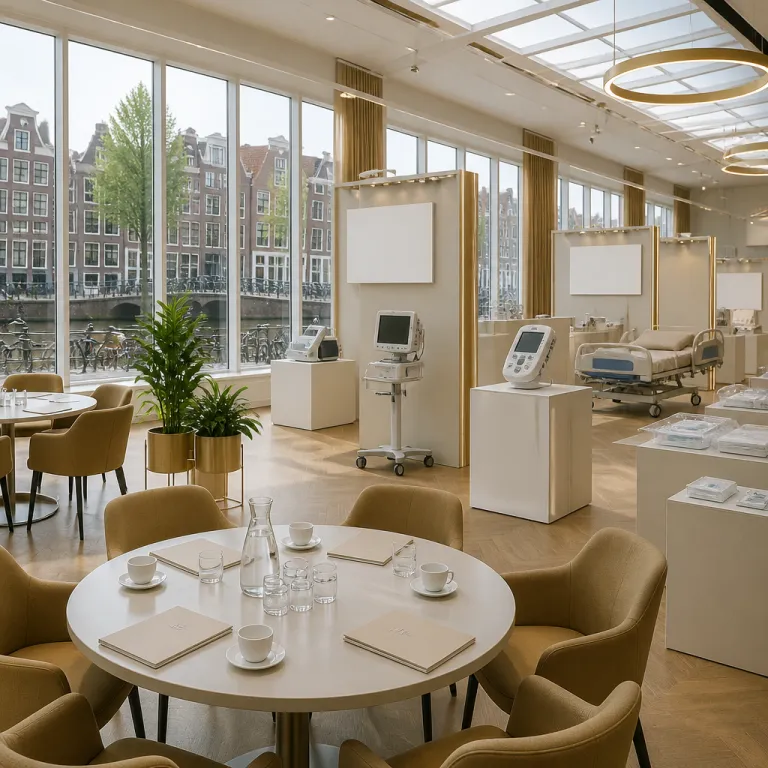
The real agenda behind a healthcare summit in the Netherlands medtech calendar
For a Dutch category manager, a healthcare summit in the Netherlands medtech circuit is not a learning trip, it is a sourcing sprint. The healthcare summit netherlands medtech 2026 conversation is really about which specific summit or international conference will put you in front of the three vendors who can actually pass your regulatory, quality, and budget filters. In this context, health and healthcare events only earn a place on your calendar if they shorten your clinical evaluation cycle and de risk procurement decisions.
The national landscape splits into three layers ; large digital health conference brands like HLTH Europe, mid sized medtech summit formats such as HealthTech Investor Summit in Utrecht, and highly focused hospital procurement days around medical devices and medical technology. Each type of summit attracts a different mix of industry experts, from chief medical information officers to vice president level procurement leaders, and each event will shape how you benchmark device pricing, technology roadmaps, and regulatory affairs readiness. Treating all healthcare and health summit formats as equal is how budgets get wasted and patient care outcomes stay flat.
For teams mapping the healthcare summit netherlands medtech 2026 options, start with a brutal question ; where will the buying committee actually sit down for thirty minutes. A global summit with polished artificial intelligence demos may impress clinical innovators, yet the same event might lack the hospital finance and compliance leaders who sign off on a medical device framework agreement. The most effective health solutions conversations often happen in smaller rooms where quality assurance officers, digital health architects, and health medical directors quietly align on risk, not on stage where global health slogans dominate.
From HLTH Europe to Utrecht: how formats differ for buyers and vendors
HLTH Europe positions itself as a pan European health and digital health marketplace, while Dutch procurement leaders treat it as one node in a wider sourcing journey. Compared with a focused healthcare summit netherlands medtech 2026 style gathering in Utrecht, HLTH Europe offers a broader global health lens but less depth on Dutch reimbursement, local regulatory compliance, and hospital GPO dynamics. For a vice president of sourcing at a university medical center, that distinction matters more than the size of the conference app or the number of stages.
In Utrecht, HealthTech Investor Summit has become a compact medtech summit where investors, scale ups, and hospital innovation teams negotiate concrete pilots in health and patient care. The event’s previous edition hosted dozens of pitching companies and several hundred attendees, which created a dense ratio of industry experts to vendors and made every clinical or regulatory conversation count. This is where a medical device supplier can walk from one meeting with a chief information officer to another with a quality assurance lead and exit with a realistic path to compliance and deployment.
Nearby, Zorg & ICT in Utrecht functions as the country’s largest digital healthcare and medical technology fair, with more than two hundred exhibitors focused on care pathways, data platforms, and hospital IT infrastructure. For procurement teams, this event is less about inspirational global summit keynotes and more about structured comparison of devices, digital platforms, and integration capabilities across competing suppliers. To understand how Utrecht positions itself as a catalyst for health and life sciences business growth, many Dutch teams study the detailed playbooks shared in the Utrecht innovation summit analysis on regional health and life sciences business growth strategies.
Where Dutch hospital procurement actually meets medtech vendors
On paper, the biggest healthcare summit netherlands medtech 2026 branded events look irresistible ; in practice, Dutch hospital procurement often prefers quieter rooms. Centralised buying through group purchasing organisations means that a handful of category managers can influence millions of euros in medical devices, digital health platforms, and clinical technology. Those decision makers rarely walk the entire exhibition floor, but they will attend closed door roundtables on regulatory affairs, quality assurance, and long term patient care outcomes.
In Amsterdam, BioCapital Europe attracts a mix of biotech, medtech, and diagnostics companies, yet the most valuable conversations for procurement leaders happen in side meetings with medical device CEOs and health solutions founders. These meetings focus on concrete topics such as post market surveillance data, artificial intelligence validation in clinical workflows, and the vendor’s ability to support Dutch language interfaces across care settings. For a hospital vice president of operations, the question is simple ; which event will let my équipe test both the financial model and the compliance posture of a supplier in a single afternoon.
Specialised procurement days in Leiden and Eindhoven go even further by aligning health, healthcare, and medical technology discussions with tender calendars and framework renewals. Here, industry experts from legal, regulatory, and IT sit alongside clinicians to interrogate device lifecycle costs, cybersecurity obligations, and integration with existing hospital information systems. For medtech vendors planning their calendar, the smartest move is often to pair one large international conference with two or three targeted Dutch events highlighted in analyses of medtech events driving innovation and collaboration, rather than chasing every global summit invitation.
The Eindhoven–Leiden–Amsterdam corridor: clinical gravity and event strategy
The Eindhoven–Leiden–Amsterdam triangle concentrates much of the Netherlands’ health, healthcare, and life sciences industry, and its event map reflects that gravity. Eindhoven’s health tech corridor hosts compact summits where engineering teams, clinical innovators, and regulatory specialists stress test new device concepts before they reach larger conference stages. These gatherings may not carry the healthcare summit netherlands medtech 2026 label, yet they often shape which medical technology platforms will be mature enough for hospital wide deployment.
Leiden Bio Science Park, with its dense cluster of biotech and medtech firms, favours events that blend clinical science with regulatory affairs and quality assurance workshops. A typical health summit there will pair sessions on global health trends with practical breakouts on MDR documentation, post market clinical follow up, and digital health data governance. For procurement leaders, this mix allows them to assess whether a medical device supplier can sustain both innovation and compliance across the full patient care pathway.
Amsterdam, anchored by Amsterdam UMC and a strong investor base, leans toward international conference formats that attract global industry experts and cross border capital. Events here often reference benchmarks from hlth USA in Las Vegas or digital health pilots in Berlin, Germany, giving Dutch teams a comparative lens on pricing, service level agreements, and technology roadmaps. The strategic play for a Dutch category manager is to use this corridor ; Eindhoven for early technology scouting, Leiden for regulatory and clinical depth, and Amsterdam for global summit level negotiation with health medical and medtech executives.
Designing a summit strategy that serves procurement, not just marketing
For a medtech vendor, the biggest mistake is treating every healthcare summit netherlands medtech 2026 opportunity as a branding exercise instead of a pipeline design problem. A procurement driven strategy starts by mapping which health and healthcare events align with your target hospital’s budget cycle, regulatory milestones, and clinical evaluation windows. Only then do you decide whether a booth, a private meeting suite, or a single sponsored roundtable will generate the best return.
When the audience is procurement, the pitch must shift from product features to risk, compliance, and total cost of ownership across the device lifecycle. That means leading with evidence on quality assurance, regulatory affairs readiness, and integration with existing digital health infrastructure, rather than only showcasing artificial intelligence features or sleek medical devices. Clinical champions still matter, but they become partners in a joint narrative about safer patient care, predictable service levels, and measurable health solutions outcomes.
For Dutch teams comparing healthcare and fintech event strategies, the analytical frameworks used in the detailed Money20/20 Europe visitor playbook on which stages, meetings, and sponsor formats actually return pipeline translate well to medtech. Apply the same discipline ; score each event on who attends, how many decision makers you can realistically meet, and whether the format supports deep conversations on medical technology, health medical outcomes, and long term service commitments. In the end, the metric that matters is not the attendee count, but the buying committee in the room.
FAQ
How should Dutch hospital procurement teams prioritise healthcare and medtech events
Procurement teams should first map their tender timelines, framework renewals, and major clinical projects, then align events that fall three to six months before those decisions. Large international conference formats such as HLTH Europe are useful for scanning global health and digital health trends, while Dutch events in Utrecht, Amsterdam, Leiden, and Eindhoven are better suited for detailed discussions on regulatory compliance, quality assurance, and integration with local care pathways. Prioritisation should be based on who will attend from the buying committee and whether the event structure supports focused meetings with vendors.
What is the main difference between HLTH Europe and Dutch medtech summits for B2B teams
HLTH Europe offers a broad, pan European view of health, healthcare, and digital innovation, attracting global summit level speakers and a wide range of medical technology vendors. Dutch medtech summit formats such as HealthTech Investor Summit or Zorg & ICT are more concentrated, with a higher density of local hospital decision makers, regulatory experts, and IT leaders who understand Dutch reimbursement and compliance requirements. For B2B teams, HLTH Europe is ideal for strategic positioning, while Dutch events are better for concrete deal making and pilot design.
Where do Dutch hospital category managers usually meet new medtech suppliers
Category managers often meet new suppliers at targeted procurement days, regional summits in the Eindhoven–Leiden–Amsterdam corridor, and focused tracks within larger events like Zorg & ICT. They also use investment oriented conferences such as BioCapital Europe to assess the financial stability and long term roadmap of medical device and digital health companies. Informal side meetings and curated roundtables at these events are usually more influential than brief stand visits on a crowded exhibition floor.
How should medtech vendors adapt their pitch for a procurement audience
Vendors should lead with evidence on total cost of ownership, regulatory affairs readiness, and quality assurance processes, rather than only highlighting clinical features or artificial intelligence capabilities. Procurement audiences expect clear documentation on compliance with MDR, data protection, and cybersecurity standards, as well as references from comparable hospitals in the Netherlands or neighbouring markets such as Berlin, Germany. A strong pitch links medical technology performance directly to measurable patient care outcomes, service level guarantees, and predictable budget impact.
Is it necessary to attend both international and Dutch healthcare events
For most Dutch hospitals and medtech vendors, a balanced portfolio of events works best, combining at least one major international conference with two or three focused Dutch summits. International events such as HLTH Europe or references to hlth USA provide perspective on global health trends and competitive positioning, while Dutch events enable detailed discussions on local regulatory, clinical, and procurement realities. The key is to ensure that every selected event has a clear objective, whether that is scouting technology, validating compliance, or closing a specific deal.